Organizing the Entryway
Create a seamless transition between the outside world and your home with ergonomic storage and smart zoning.
Expert
Grace Young
Published
2026-06-30
The Fundamentals of Entryway Flow
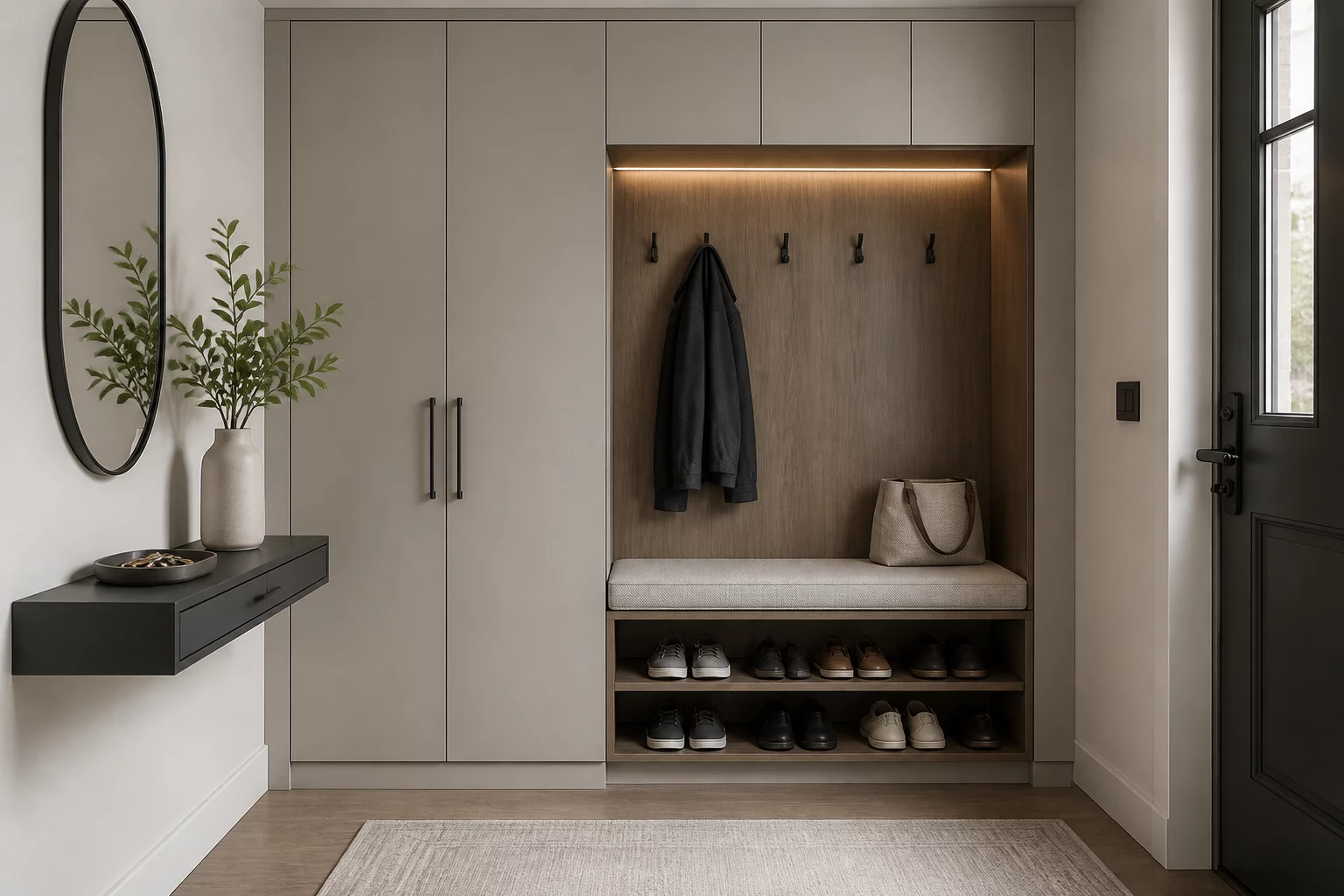
The entryway is far more than a simple passage; it is the functional engine of the household's daily departures and arrivals. In many homes, this area suffers from a lack of clear purpose, becoming a catchment for stray shoes, discarded mail, and tangled leashes. Effective organization begins with acknowledging the physical requirements of the transition. You need space to bend, reach, and set things down without obstructing the path of others. By applying the principles of interior anthropometry, we can determine exactly where a bench should sit and how high a hook should be placed to accommodate the human form in motion. A well-designed hall respects the sequence of events: you enter, drop your keys on a designated surface, sit to remove shoes, and then hang your coat. When each action has a corresponding zone, the space maintains itself naturally. Beyond aesthetics, a structured entryway reduces the stress of leaving the house, ensuring that everything from umbrellas to dog leads is exactly where logic dictates it should be.
Pro Interior Tip
Think of your entryway in layers. The 'Active Layer' holds what you use daily, while the 'Deep Layer' (closed cabinets or baskets) stores seasonal items. Separating these ensures you never have to dig through winter scarves to find your car keys in July.
Step-by-Step Logic
-
1
Establish a Clear Boundary: Use a high-quality, absorbent mat or a change in floor texture to define the threshold. This serves as a psychological cue that the 'outside' ends here, preventing dirt from migrating into the living zones.
-
2
Prioritize the Landing Strip: Every entrance needs a small console or shelf for small essentials. This 'landing strip' should be positioned at a height of 75-90cm, making it comfortable to place keys or wallets immediately.
-
3
Optimize Vertical Real Estate: Standardize hook placement based on the height of users. Primary coat hooks should be at 150-170cm, while bags or children's items work best at 100-110cm to keep the floor clear and walkways safe.
Expert Discussion
No insights shared yet. Be the first to contribute to the logic of this transition space.
Add to the logic