
Structuring a Large Kitchen: Logic for Spacious Culinary Zones
Large kitchens offer immense potential but often suffer from spatial fatigue. We explore how to break down vast square footage into intimate, high-performance work centers.
Expert
Jack Allen
Published
2026-06-24
The Fundamentals of Kitchen Zoning
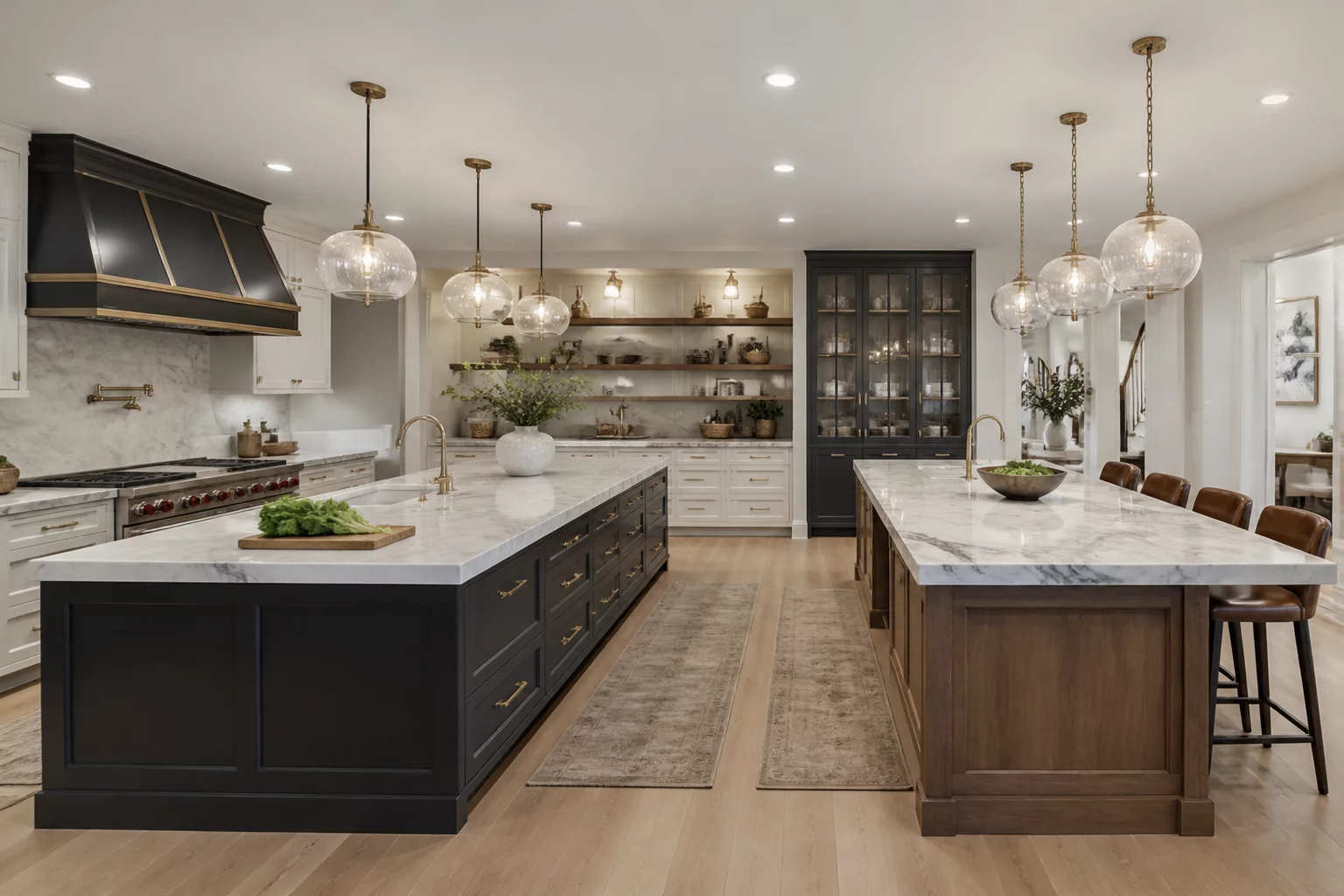
Stepping into a massive kitchen can be overwhelming rather than inspiring if the layout is poorly conceived. We often see homeowners prioritizing aesthetics over ergonomics, resulting in a space where simple tasks require excessive movement. The secret to success in large-scale design is the creation of 'micro-zones'—semi-independent workstations that handle specific functions such as cleaning, prepping, or beverage service. By treating the large room as a cluster of smaller, highly efficient modules, you maintain the grandeur of the space while ensuring it remains practical for daily use.
Pro Interior Tip
In kitchens over 25 square meters, a single island is often insufficient. Consider a "Double Island" strategy: one dedicated to wet prep (sink, dishwasher) and another to dry prep or social dining. This prevents guests from entering the primary cooking zone while keeping the chef central to the conversation.
Step-by-Step Logic
-
1
Anchor Point Grouping: Identify primary water, heat, and cold storage locations and group them to prevent excessive cross-room movement during meal preparation.
-
2
Social Boundary Creation: Designate a clear perimeter for guests using furniture or islands that physically separate the cooking workflow from the social gathering area.
-
3
Station Specialization: Break up large counters into dedicated hubs like a baking station, coffee corner, or secondary prep area to allow multiple users to work without interference.
-
4
Deep Storage Integration: Utilize wide pull-out drawers and pantry towers located within two steps of the primary prep area to avoid cross-room travel for heavy equipment.
-
5
Visual Symmetry and Sightlines: Align islands with architectural features like windows or doorways. In a large room, visual balance is as important as physical flow for creating a cohesive atmosphere.
Expert Discussion
No insights shared yet. This could be your first comment.
Add to the logic