
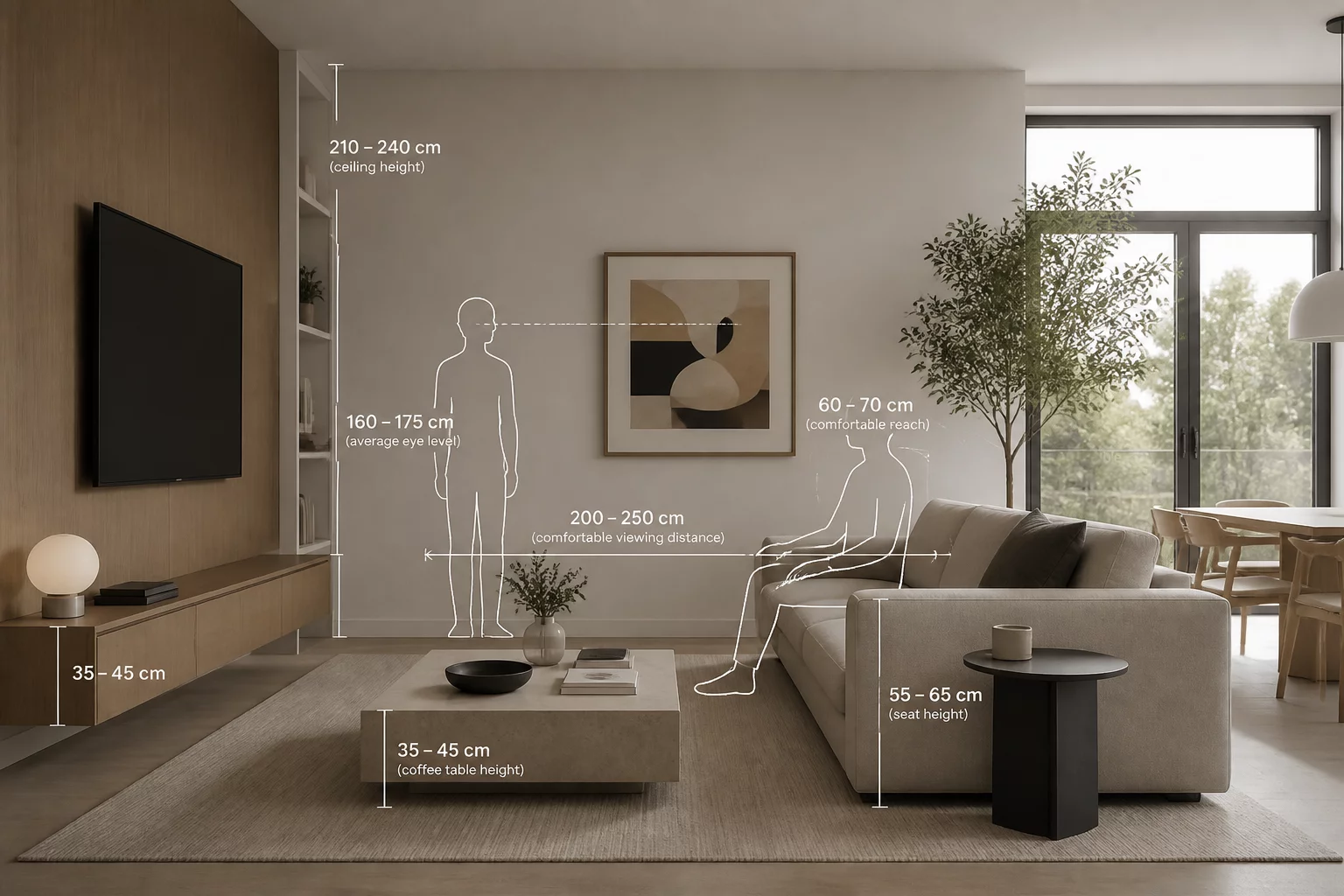
The Foundation of Ergonomic Layouts
Human scale is the cornerstone of functional interior design. It refers to the physical relationship between the human body and the architectural environment. Without a deep understanding of how a person moves, reaches, and rests, a space remains a mere collection of furniture rather than a living habitat. Designers rely on anthropometry—the study of human body dimensions—to determine everything from the height of a light switch to the depth of a sofa.
When we talk about human scale, we are essentially looking at the 'average' body, while accounting for the variations that make each individual unique. Standardized dimensions, such as the 90cm kitchen counter height or the 45cm seat height, are not arbitrary; they are the result of decades of research into what creates the least amount of physical stress on the human musculoskeletal system.
Primary Reach and Comfort Zones
Designing for the human scale requires a focus on reach zones. The primary reach zone is the area a person can access without straining their back or shoulders. In a seated position at a desk, this is usually within a 40cm radius. In a standing position, the most comfortable storage zone lies between the waist and eye level. Placing frequently used items outside these zones forces the body into awkward positions, leading to long-term fatigue.
- Static Dimensions: These are the measurements of the body at rest, used for choosing chairs, beds, and desk heights.
- Dynamic Dimensions: These account for the body in motion, determining the width of hallways, the swing of doors, and the clearance needed to pull out a dining chair.
Sightlines and Visual Proportions
Human scale also dictates our psychological comfort within a room. A ceiling that is too low can feel oppressive, while a vast, open hall without intermediate furniture can feel cold and intimidating. We perceive space relative to our own height. By placing artwork at a standard eye level (roughly 150cm from the floor to the center of the piece) and ensuring that pendant lights hang at a height that doesn't obstruct views across the room, we create a sense of harmony and 'rightness' that the human brain recognizes instantly.
Community Insights
Alice
Visitor
Very helpful dimensions for my hallway.
Mark
Visitor
Great explanation of human scale.
Add your observation