The Anatomy of Comfort
Seating ergonomics is the science of designing chairs and sofas to support the human body's natural alignment. When we sit, the weight distribution shifts primarily to the ischial tuberosities—the "sit bones." Without proper support, this lead to muscle fatigue, spinal compression, and poor circulation. Understanding specific dimensions is the first step toward creating a truly functional living space.
Critical Dimensions: Seat Height and Depth
The most vital measurement is the popliteal height—the distance from the floor to the underside of the knee. For most adults, a seat height of 400mm to 450mm allows the feet to rest flat on the floor, reducing pressure on the lower back. If the seat is too high, legs dangle, causing circulatory issues; otherwise, if it is too low, the weight shifts uncomfortably to the tailbone.
Seat depth is equally crucial. A gap of approximately 50mm should exist between the front edge of the seat and the back of your knees. This prevents the chair from cutting off blood flow while ensuring your back can reach the lumbar support properly.
Angling for Relaxation
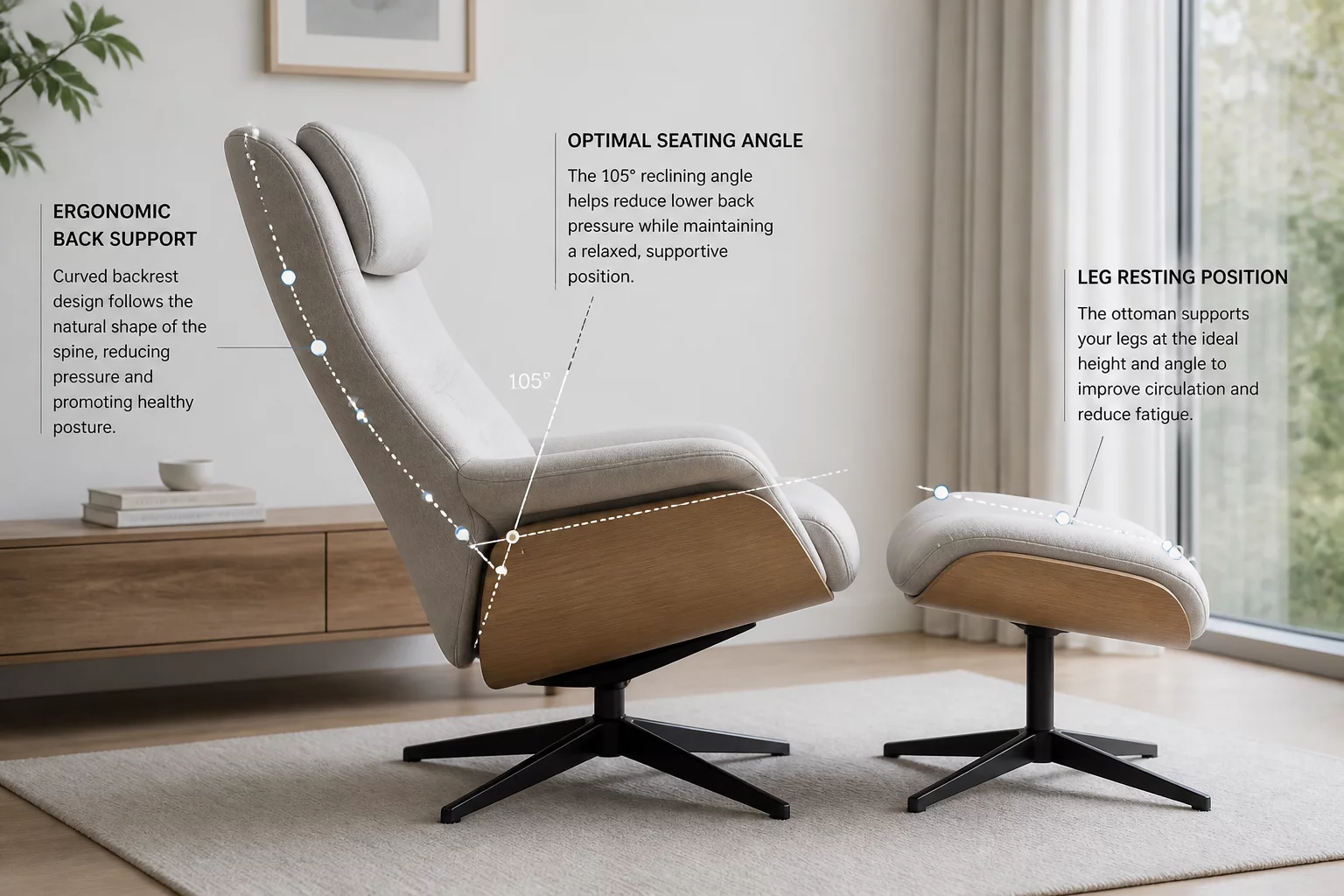
The relationship between the seat and the backrest determines the chair's purpose. In a dining environment, a near-vertical backrest (95° to 100°) encourages an upright posture suitable for eating and conversation. However, for a lounge or reading chair, a more generous angle of 105° to 115° allows the torso to lean back, transferring some upper-body weight to the backrest and relieving the spine.
Supporting the Extremities
- Lumbar Support: A slight curve in the lower third of the backrest helps maintain the spine's natural S-shape.
- Armrests: Ideally positioned 200mm to 250mm above the seat height to allow shoulders to remain relaxed.
- Seat Width: A minimum of 450mm is standard for comfort across different body types.
When planning your layout in Sweet Home 3D, remember that these dimensions define the psychological "feel" of a room. A perfectly scaled chair can still feel wrong if the clearance around it doesn't allow for the natural movement of legs and arms during sitting and standing transitions.
Community Insights
Laura
Visitor
Perfect for planning my living room.
Chris
Visitor
The seating angles make total sense now.
Add your observation